By Len Wright, as seen on Forbes.com
Leading a nationwide company of locally governed professionals is complex. It requires balancing organizational priorities with local realities, fostering unity while respecting differences and leading with both decisiveness and flexibility.
Our company is fueled by thousands of anesthesia clinicians caring for patients in hundreds of facilities across the country. Within this national framework, our business model empowers each practice to best meet the needs of the local patients, clinicians and facilities we serve. We are “physician-owned,” and each of our anesthesia groups has its own governance board that is responsible for clinical decision-making for their practice.
Our presence at each health care facility we serve is led by a site leader, who is equipped and empowered to create a service-minded culture that focuses on the unique needs and objectives of that specific facility. This creates an aligned partnership in the complex delivery of anesthesia services.
Effective management of a decentralized organization must pivot around the word “and.” It must involve balancing between organization-wide priorities and locally important needs. Leaders must simultaneously consider what’s best for the broader enterprise and account for local priorities and conditions. This dual focus means decisions should be grounded in the realities of the overall business and a deep understanding of the day-to-day operations at the local level.
To meet these objectives, organizations should strive for the following five goals.
Invest In Leadership
For an organization to preserve and promote strong local governance, while maintaining consistent standards and scalability, it needs leaders who have strong skill sets as strategic thinkers. These leaders also need solid relationship-building capabilities.
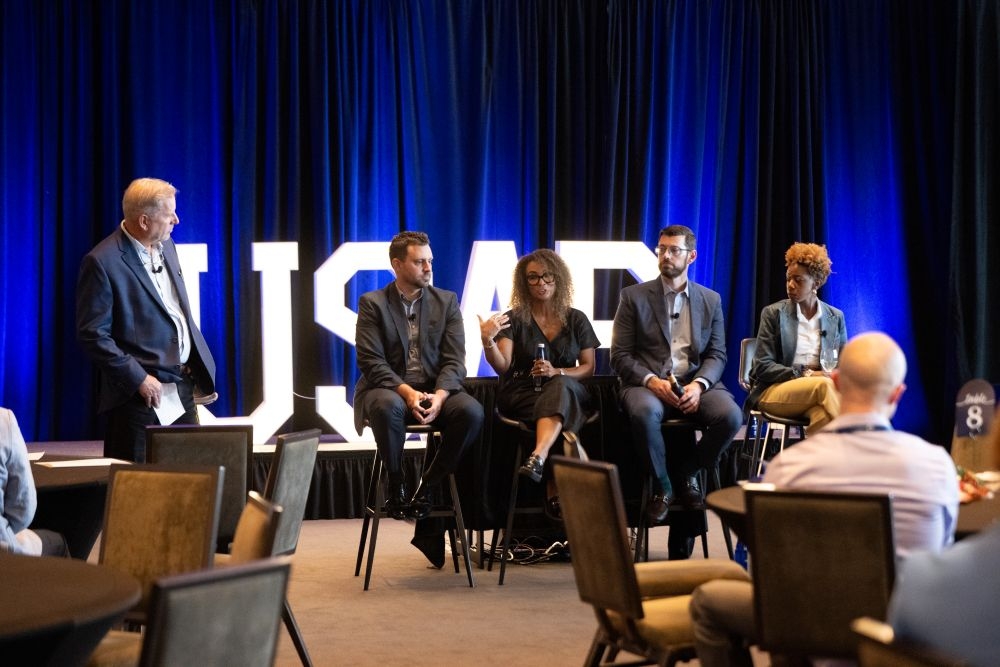
Businesses—especially those in healthcare like ours—often have little control over the environment and culture of the facilities they service; however, they can manage the process of placing the right leaders in those facilities. Organizations can make sure to provide those facilities with training, tools and development opportunities that enable them to lead with confidence. This can be done through a variety of in-person training programs, an annual leadership conference and a robust online syllabus, whereby clinicians can take advantage of leadership courses and tools all built around their busy schedules.
Build Consensus
In order to continue to thrive in this de-centralized framework, leaders must build consensus. Building consensus is the practice of bringing diverse perspectives together to arrive at a common ground that all parties can support. This is not easy by any stretch, and requires patience, active listening, respect for differing viewpoints and the practice of thinking about issues with a broader, non-self-serving manner.
By taking the time (and energy) to build consensus, teams can typically arrive at the same place and can support initiatives without doubt or second-guessing. When our teams show up, we show up on the same page—together. By identifying shared goals, values and processes, leaders can channel their energy into building cohesion, leveraging strengths that transcend geography.
Lead With Inquiry
Asking questions and seeking to understand the answers creates a culture of trust and partnership. By staying in touch with our local site leaders in each location, our leadership can remain grounded in the realities of each geography we serve.
Curiosity is central to communication. Asking questions and actively listening while trying to understand local challenges is a consistent, critical sequence that fosters communication and alignment. Trying to guess or speculate is a recipe for disaster. Jumping to a conclusion without thoroughly understanding that there may be “three sides” to the story can and will create insurmountable issues.
Set The Right Guardrails
Leadership in this type of organization requires a system of “dual width” guardrails. There are many areas, such as safety, clinical quality, compliance and ethical integrity that require narrow, non-negotiable guardrails.
In other areas, a leader has the freedom to set wider parameters that allow local teams the autonomy to adapt and compromise to find the right solution—while, at the same time, never losing sight of the connection to the broader organizational goals. In other words, organizations need to align nationally around non-negotiables and create space with wider guardrails locally.
Test, Learn, Adapt
We follow the same practice with the roll-out of new medical or business technology. Rather than a mandate from the corporate team forcing a new system down on each practice simultaneously, we take the time to pilot initiatives at a few local levels to test their efficacy.
Even if an innovative technology is successful in one location, realize it might not work in another as configured—but it could if adaptations are made. Adopting this “test and learn” mindset allows teams to experiment, gather feedback and iterate on solutions that may accrue benefits for the whole organization. When successful, these pilots create internal experts with influence and credibility to help replicate best practices.
Conclusion
Leading a diverse, decentralized organization is a balancing act that requires strategic vision, local sensitivity and strong relationships. Constant tension exists. Yet, a common purpose and a shared vision, along with empowered local leaders, can create the best of both worlds—a cohesive organization that can simultaneously act with nimbleness to address local needs and priorities.